
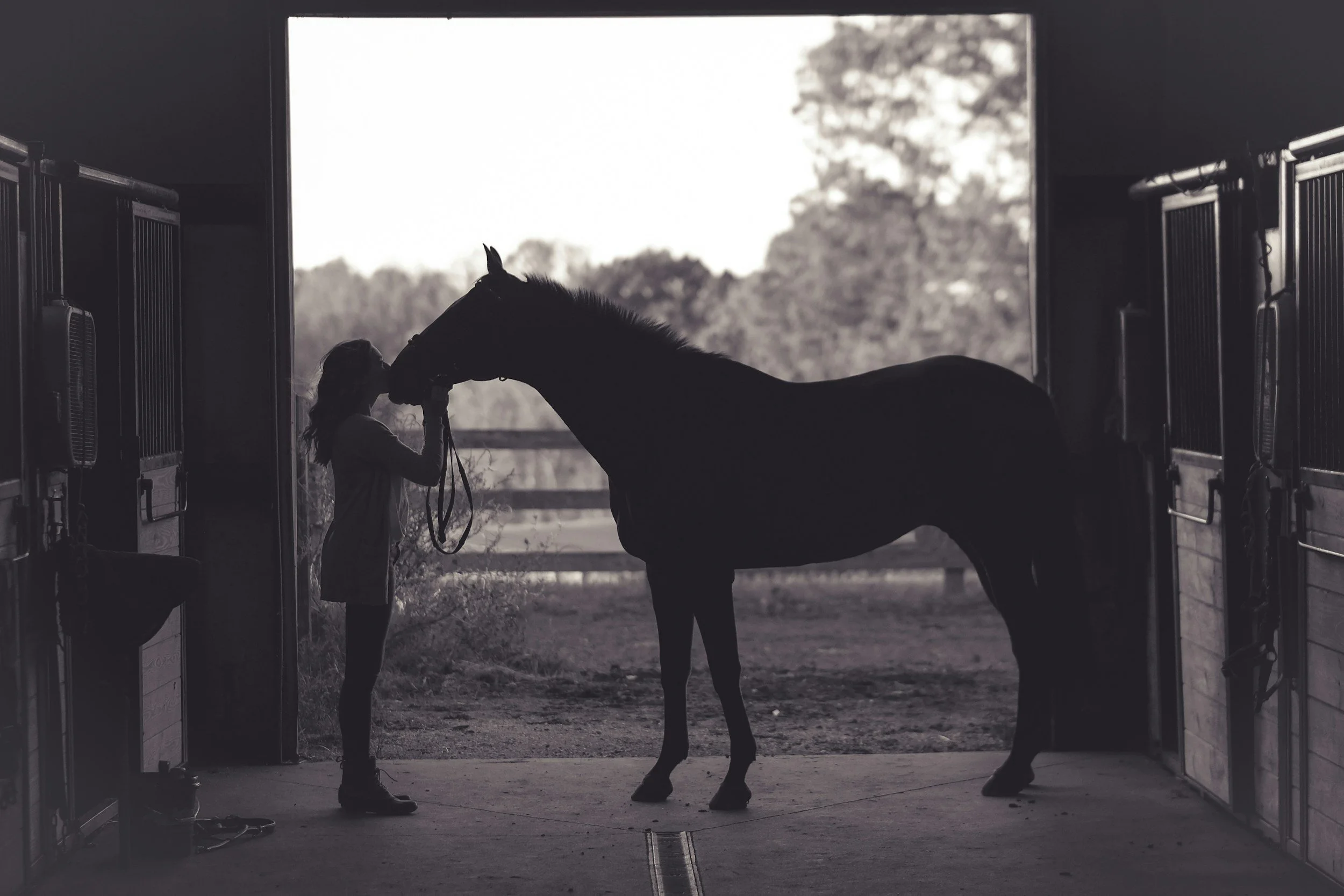
living in connection
Equine-assisted coaching • Adults, 18+ • affecting change in your relationships.
An experiential approach to exploring relational patterns and the ways past trauma may be influencing how we show up in relationships today.
A structured path toward real change
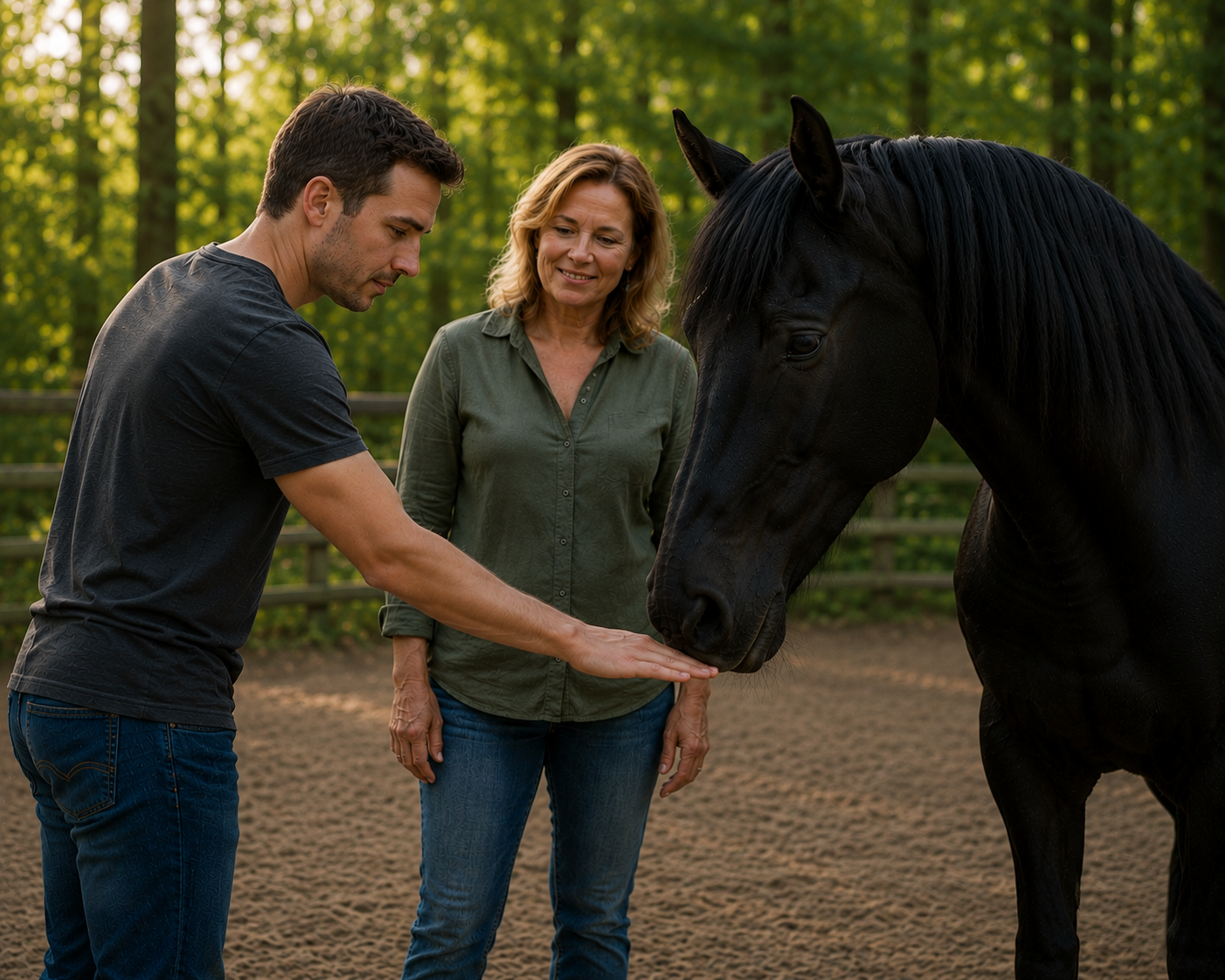
Our coaching approach is guided by the Equid-Nexus model — an adaptation of the Internal Family Systems (IFS) framework developed specifically for equine-assisted coaching.
IFS understands our internal patterns as protective strategies: parts of us that developed for good reasons, but sometimes outlive their usefulness. This equine-assisted version brings this framework into the relationship with horses, where those patterns show up in real, observable ways.
Where We Begin
A new lens for understanding.
Before you can change patterns, you need to understand them — not just intellectually, but in the context of your nervous system, your relational history, and the way your body has learned to protect itself.
The Groundwork is the foundational orientation for the From the Ground Up program. It gives you the language, the concepts, and the early embodied awareness that makes everything that follows more coherent and more useful.
What The Groundwork covers:
- Nervous system awareness — how your nervous system responds to stress, safety, and relationship
- Attachment theory & early patterns — a non-pathologizing look at how early relational experiences shape adult connection
- Connected Horsemanship principles — the philosophical and practical foundation for working with horses as genuine partners
- Connection vs. control — the organizing distinction of all Dayspring work
But knowing doesn't produce transformation —
practice does.
Which leads to →
Where understanding becomes capacity.
Insight is not transformation. Practice is. Embodying the principles learned in The Groundwork, we enter into relational practice with an equine partner. Guided by the principles of connected horsemanship, you'll begin building a relationship with an equine partner of your choosing.
Your interactions will allow your relational patterns to surface in real time:
Which leads to →
Integration for thriving — affecting change in your relationships.
This coaching approach brings structure and depth to how the relationship with horses reveals and influences real change.
Goals of coaching may include a new understanding of:
- Connection — Reconnecting to yourself as the foundation for connecting with others.
- Trust — When we learn early that others can't be relied on, we learn to rely only on ourselves. We can rebuild the capacity for genuine trust.
- Attunement — The ability to know what you need, and to stay present to what others need — without losing yourself in the process.
- Shame — Shame can only be healed in connection with another. This work explores the patterns shame produces and what becomes possible when it begins to lift.
- Autonomy — The capacity to act from your own values — to say no without guilt, to say yes without resentment, to be both connected and free.
- Repair — Rupture is inevitable in relationships, but the ability to repair is what makes relationships stronger.
You don’t just understand your behavior patterns —
you outgrow them

FAQ
-
Possibly, on a cognitive level. But knowing something and having your body learn it are two different things. People with significant prior personal development work often find that equine partnership surfaces patterns that talk-based approaches haven't reached. We still recommend starting with The Groundwork.
-
No. This is coaching and learning-based practice. It doesn't involve diagnosing, treating, or processing trauma clinically. If you're currently in therapy, this work can complement that care well. If you're unsure whether you need therapy rather than coaching, we're happy to talk through that honestly.
-
Our sessions aren't lessons or talks — they're something better.
Welcome & Check-In
We start by slowing down. A simple check-in — how are you arriving today? — before heading into the barn. This is where the real work begins: practicing what it means to truly show up.Watch Before You Move
Before any contact with the horses, we stop and look. What do you notice? What might the horse be feeling? This builds the habit of reading a situation before jumping in — one of the most useful skills there is.Practice With a Horse
With a horse as a partner, you practice real skills — asking for what you need, knowing when to hold a limit, staying calm when something doesn't go as planned, or finding your way through when something goes wrong.Reflect & Close
We close by taking time to say goodbye to our equine partner and reflect on what we noticed, what may have surprised us, and how it might show up at work, at home, or in our relationships. -
Asking for What You Need
You practice making a clear, direct request — and staying open to the answer. You learn that how you ask matters as much as what you're asking for.Working Through Conflict
When things don't go as planned, you practice staying present — not shutting down, not escalating — and finding a way through.Holding a Limit
Saying no — and meaning it. You learn that you can be clear and firm at the same time, and that holding a boundary doesn't have to turn into a confrontation.Staying Calm Under Pressure
When things get hard, unexpected, or frustrating — you practice keeping it together long enough to make a good decision, instead of just reacting.Making Things Right
Relationships don't need to be perfect. They need someone willing to try again. You practice exactly that — the skill of coming back after a hard moment. -
Connected Horsemanship is a relationship-based approach to working with horses that prioritizes consent, attunement, and mutual respect over control and compliance. At Dayspring, it is the philosophical and practical foundation for all equine work.
-
It depends on your pace, goals, and how frequently you come. We'll talk through realistic timelines during your intake conversation and check in at each transition point. The work is designed to build lasting capacity — not ongoing dependency.